MYCIN: The 1970s Medical AI That Knew How to Explain Itself
Acronyms and terms used in this post:
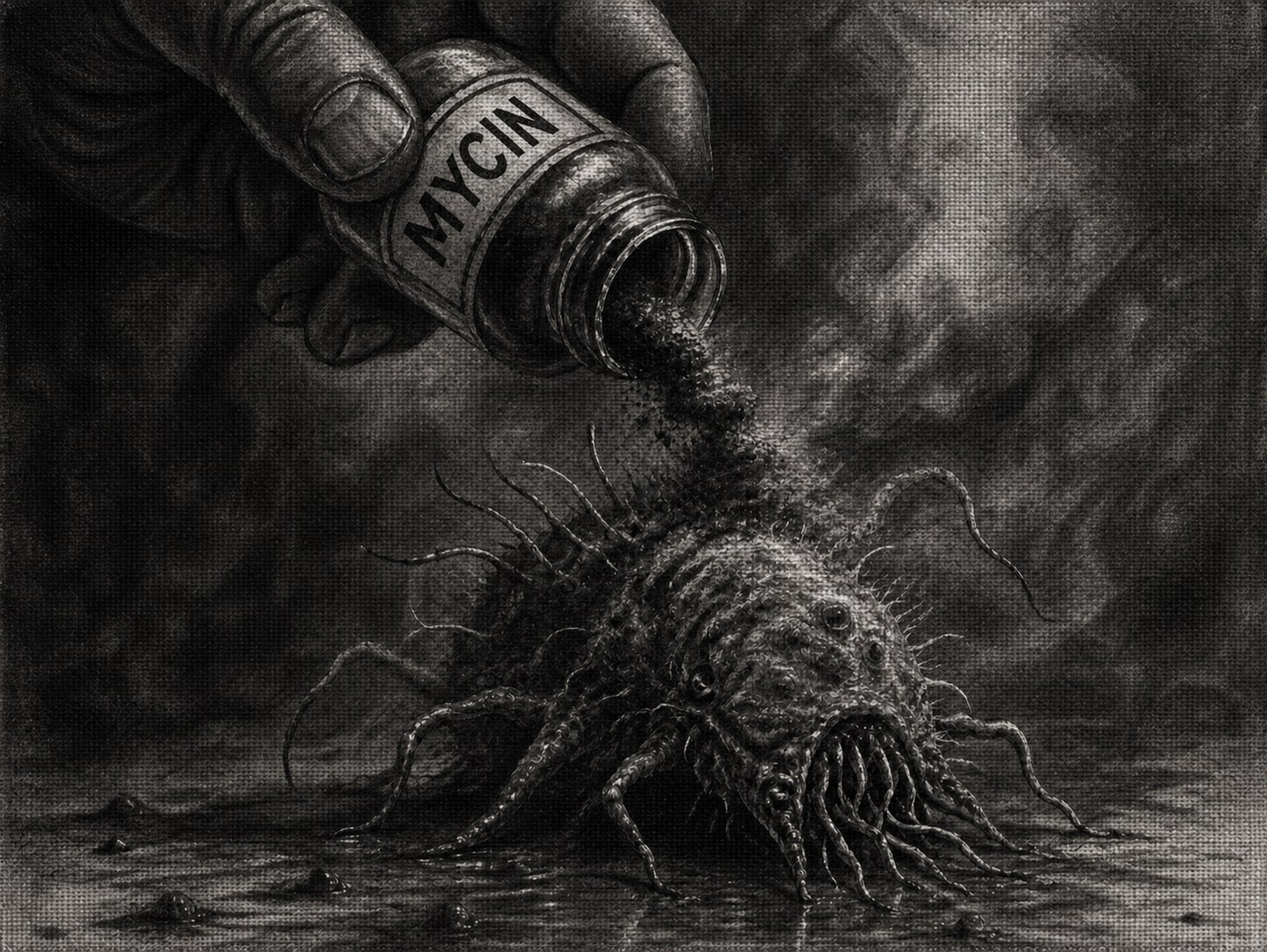
MYCIN: Not an acronym. It was named to sound like an antibiotic, borrowing the familiar “-mycin” ending from names such as streptomycin, erythromycin, and clindamycin.
AI: Artificial Intelligence, software methods that try to perform tasks usually associated with human reasoning, pattern recognition, or language understanding.
CDS: Clinical Decision Support, software that gives clinicians patient-specific warnings, suggestions, reminders, or recommendations.
EHR: Electronic Health Record, the main clinical software system used to document and manage patient care.
HL7 v2: Health Level Seven version 2, an older but still heavily used messaging standard for moving clinical data between healthcare systems.
FHIR: Fast Healthcare Interoperability Resources, a newer healthcare data exchange standard based on modular resources and web-style interfaces.
API: Application Programming Interface, a controlled way for software systems to request or exchange data.
UI: User Interface, the screen or interaction layer through which a person enters and reviews information.
LLM: Large Language Model, an AI system trained on large amounts of text to interpret and generate language.
IgE: Immunoglobulin E, an antibody type involved in many immediate allergic reactions.
MYCIN was not primitive because it was born in the 1970s. It was primitive because medicine itself is a stubborn goat tied to a lamppost, refusing to walk neatly into anybody’s logic diagram.
Built at Stanford University in the 1970s, MYCIN was an early medical expert system. It was designed to help identify bacteria causing serious infections, especially bloodstream infections and meningitis, and then recommend antibiotic treatment. That sentence sounds ordinary now, because today every second company with a pitch deck claims to have AI that can diagnose your grandmother, optimize the hospital, reduce costs, increase empathy, and possibly fry luchis if given enough venture funding. But in the 1970s this was a bold thing. Computers were still large, expensive, and slightly priestly objects. You did not casually ask one for clinical advice.
MYCIN did something surprisingly modern. A user entered details about a patient. The system asked questions. It used a knowledge base of medical rules. It applied an inference engine. It handled uncertainty with something called certainty factors. Then it produced advice. Most importantly, it could explain why.
That last part matters.
Today we have systems that can write a discharge summary in the voice of a tired consultant and produce a confident answer with the expression of a man who has never missed a bus in his life. But confidence is not explanation. A parrot in a silk waistcoat is still a parrot. MYCIN, old and limited though it was, understood that a clinical recommendation must be inspectable. A doctor should be able to ask, “Why are you saying this?” and get something more useful than a shrug wrapped in mathematics.
And no, MYCIN is not an acronym.
It was named to sound like an antibiotic, borrowing the familiar “-mycin” suffix seen in drugs such as streptomycin, erythromycin, and clindamycin. That was apt because MYCIN lived in the world of infections and antimicrobial therapy. The name was a biomedical pun, not a secret technical expansion. It does not stand for “Medical Y…” anything, although it looks as if some committee in a windowless room might have tried to make it do so.
That small fact is charming. Also revealing. MYCIN belonged to a time when people were still trying to build AI by writing down expertise carefully, almost like a meticulous Bengali grandmother measuring spices by eye but somehow producing the same miracle every time. A little turmeric, a little cumin, a little suspicion of gram-negative bacteria, and there you are.
The architecture was simple enough to draw on paper. There was a user. There was an interface. The user described the case. The system consulted a knowledge base. The inference engine applied rules. Then it produced advice and an explanation. Clean. Almost innocent.
Then medicine entered the room and kicked the furniture.
Because a “case” is not a neat object. It is not a row in a spreadsheet. It is a moving cloud of facts, guesses, timings, lab results, missing details, hurried notes, and human judgment. A fever before antibiotics is not the same as a fever after antibiotics. A negative culture after partial treatment is not the same as a true negative. “Penicillin allergy” may mean childhood rash, nausea, family rumor, or genuine anaphylaxis. The computer sees one label. The patient brings a whole messy biography.
This is the central problem of clinical AI. Not intelligence. Representation.
Before a machine can reason about a patient, someone must decide how the patient becomes data. What counts as infection? What counts as allergy? What counts as evidence? What is current? What is historical? What is suspected? What is confirmed? What is merely copied forward from 2013 by a resident who had thirty-seven other things to do and a sandwich dying slowly in his bag?
That is where MYCIN remains useful as a teaching fossil. Like those old bones in a museum, it does not move, but it tells you how the living creature once stood.
MYCIN showed that the user interface is not just decoration. It is part of the reasoning system. The questions it asks shape the case. The available answers shape the meaning. If the screen allows only crude choices, the resulting data will be crude. Later, some poor analyst will call it a data quality problem. It may not be. Often it is a representation problem wearing a cheap moustache.
This distinction is missed all the time.
Data transport is not meaning. HL7 v2 can move a lab result from one system to another. FHIR can make data easier to request and structure. APIs can pass information around like envelopes in a government office. But none of this guarantees that the receiving system understands the clinical meaning. Was the result preliminary? Was it corrected? Was the specimen contaminated? Was the blood culture drawn before antibiotics? Did the local lab change its method? Did the patient already receive treatment elsewhere? The message arrived. Meaning may still be standing at Sealdah station, looking confused.
Healthcare IT people know this pain. A system says the interface is working. The engine shows green. The file landed. The message parsed. The dashboard refreshed. Everyone claps politely. Then a clinician looks at the patient and says, “This is wrong.”
And the room goes quiet.
That is the gap between moving data and preserving meaning.
MYCIN worked in a narrow domain, and that was wise. It did not try to become the entire hospital brain. It focused on infectious disease consultation. Even there, the territory was slippery. Antibiotic choice depends on organism, site of infection, severity, kidney function, liver function, allergies, pregnancy, local resistance patterns, immune status, prior antibiotics, drug interactions, and whether the source of infection has been controlled. Medicine is not a railway timetable. It is more like Kolkata traffic in the rain. There are rules, yes. They are just not always the rules you thought you were using.
The old expert-system approach had strengths. Rules could be read. Rules could be argued with. Rules could be corrected. If MYCIN made a poor recommendation, one could inspect the chain: was the patient description wrong, was the rule wrong, was the uncertainty calculation weak, or was the explanation misleading?
Modern AI often makes this harder. A model may be powerful, but its internal reasoning can be opaque. It may find patterns no human wrote down. That is useful. It is also dangerous when the data contains old institutional habits, billing distortions, access bias, copy-forward notes, and workflow debris. A model trained on hospital data does not only learn disease. It learns the hospital. It learns who gets tested, who gets ignored, who gets coded carefully, who gets summarized badly, and whose suffering arrives in the database as a faint smudge.
That is not a small issue. That is the issue.
MYCIN’s knowledge base was explicit. Today’s models often hide knowledge inside weights. This does not make old rule systems better. They were brittle. They aged badly. They needed constant expert maintenance. They could not easily handle the full swamp of clinical life. But they had one virtue we should not casually discard: their assumptions were visible.
Visible assumptions are not glamorous. They do not make good marketing copy. But they are useful in the same way a working drain is useful in monsoon season. Nobody praises it until it fails.
Why did MYCIN not take over medicine? The answer is not simply that the technology was too early. It had legal problems, workflow problems, trust problems, infrastructure problems, and accountability problems. If the system recommended a drug and the patient was harmed, who was responsible? The doctor? The hospital? The programmer? The Stanford expert whose rule had been encoded years earlier? Healthcare has a magnificent talent for turning responsibility into fog.
Workflow was another killer. A clinical tool must appear at the right moment. Too early and it is irrelevant. Too late and it is a historian. Too intrusive and clinicians hate it. Too quiet and nobody notices it. If it requires duplicate entry, it becomes homework. And nobody, especially in a hospital, wants more homework.
This is why so much modern CDS fails. It is not enough to show an alert. The alert must understand the clinical situation. Otherwise it becomes one more mosquito in the room, whining near the ear while actual work is being done.
The lesson for modern healthcare AI is not “bring back expert systems.” That would be nostalgia with a stethoscope. The lesson is better: keep the discipline. Bound the domain. Make the assumptions visible. Preserve provenance. Separate transport from meaning. Treat the interface as a data-making machine. Do not call every representation failure a data quality problem. Do not pretend the model is the whole architecture.
A serious clinical AI system needs more than a clever algorithm. It needs case definition, terminology governance, workflow awareness, temporal logic, source-of-truth rules, exception handling, monitoring, feedback, and clear accountability. Less glamorous than a demo. More likely to survive contact with Tuesday morning.
And Tuesday morning is where all healthcare software eventually goes to be judged.
In the boondocks of Calcutta, where I sit with tea, unstable electricity, and the minor financial suspense of middle age, this old Stanford system feels oddly current. The world has changed. The machines are faster. The screens are prettier. The promises are louder. But the old question remains exactly where MYCIN left it.
Can we represent clinical reality well enough for a machine to reason over it?
Not perfectly. Never perfectly.
But better than a dropdown pretending to be a diagnosis. Better than a message pretending to be meaning. Better than a black box pretending to be wisdom.
MYCIN’s little diagram still has teeth: user, interface, case, knowledge base, inference engine, advice, explanation. It looks almost childlike now. But hidden inside it is a warning that has not aged at all.
Clinical AI does not begin with intelligence.
It begins with the much harder business of saying what the patient’s story means before the machine starts talking.
P.S. References: Edward H. Shortliffe, Computer-Based Medical Consultations: MYCIN, 1976. Bruce G. Buchanan and Edward H. Shortliffe, Rule-Based Expert Systems: The MYCIN Experiments of the Stanford Heuristic Programming Project, 1984. William J. Clancey, “The epistemology of a rule-based expert system: A framework for explanation,” Artificial Intelligence, 1983.